Rikkoutuvatko kertakäyttömaskinne keskeisissä suorituskykytesteissä?
A: Vaikka perinteinen ajattelu olettaa tämän kompromissin, edistynyt kuitutekniikka mahdollistaa näiden parametrien erottamisen toisistaan. Patentoitu kuitusekoituksemme luo mutkittelevia ilmavirtausreittejä, jotka vangitsevat hiukkasia säilyttäen samalla laminaarivirtausominaisuudet. Ajattele sitä optimoiduilla rampeilla varustetun moottoritiejärjestelmän suunnitteluna sen sijaan, että vain lisättäisiin kaistoja. Avain on kuitujen halkaisijajakauman hallinnassa – pidämme 95 % kuiduista 1,8–2,2 mikronin välillä alan standardin 1,5–3,0 mikronin sijaan, mikä luo yhdenmukaisemman huokosgeometrian.
A: Jokaisella tuotantolinjalla on seitsemän reaaliaikaista valvonta-asemaa: raaka-aineiden spektroskopia, rainanmuodostuksen tasaisuus, sähköstaattisen varauksen tasaisuus, kerrosten liitoksen eheys, hengittävyyskartoitus, korvalenkkien kireyden mittaus ja lopullisen pakkauksen sulkemisen varmennus. Kaikkien asemien tiedot syötetään koneoppimisjärjestelmään, joka ennustaa laatupoikkeamat jopa 500 maskille etukäteen ja mahdollistaa automaattiset kalibrointisäädöt. Vikaprosenttimme pysyy alle 0,03 prosentissa 300 miljoonan yksikön vuosituotannolla.
K4: Mitä erityisiä mukautuksia olet tehnyt erilaisten alueellisten standardien ja vaatimusten mukaisiksi?
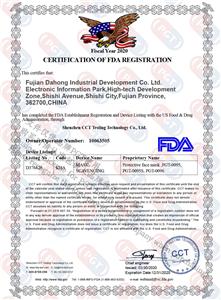
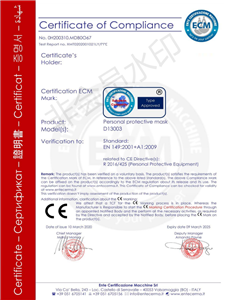
A: CE- ja FDA-perussertifikaattien lisäksi meillä on 17 erillistä sertifiointiprofiilia. EU-markkinoille olemme optimoineet EN 14683:2019 Type IIR -standardin mukaisesti ja tehneet lisätestejä tiukemman DIN SPEC 91401 -standardin mukaisesti yleiskäyttöön tarkoitetuille maskeille. Pohjois-Amerikassa täytämme ASTM F2100 Level 3 -standardit ja sisällytämme samalla NIOSH-42 CFR 84 -suositukset teollisuuskäyttöön. Aasian sertifikaatteihimme kuuluvat Japanin JIS T 9001 ja Kiinan YY 0469-2011, ja materiaalikoostumukset on mukautettu alueellisiin kosteusmalleihin ja epäpuhtauksien hiukkaskokojakaumaan.
K5: Miten puututte kestävän kehityksen huolenaiheisiin tinkimättä suorituskyvystä?
A: Olemme kehittäneet kolmitasoisen lähestymistavan: Ensinnäkin materiaalien optimointi vähentää kuitukankaiden jätettä 22 % tarkkojen leikkausalgoritmien avulla. Toiseksi tarjoamme teollisuusasiakkaille takaisinotto-ohjelman, jossa käytetyt maskit jalostetaan rakennuseristemateriaaleiksi erikoistuneen pyrolyysin avulla, joka neutraloi biologiset epäpuhtaudet. Kolmanneksi tutkimus- ja kehitystiimimme pilotoi biopohjaista polymeeriseosta, joka ylläpitää suodatustehon ja lisää samalla biohajoavuutta teollisissa kompostointiolosuhteissa – tällä hetkellä saavutetaan 85 %:n hajoaminen 180 päivässä vaarantamatta säilyvyyttä.
Kertakäyttöisten lääketieteellisten maskien teknologian todellinen mitta ei löydy pelkästään sertifiointiasiakirjoista – se paljastuu hiljaisina hetkinä, jolloin suojausjärjestelmät toimivat moitteettomasti odottamattomissa olosuhteissa. XIAMEN JIASHENG FOREIGN TRADE CO., LTD.:ssä olemme siirtyneet vaatimustenmukaisuuden rajoista pidemmälle ja luoneet insinöörien kutsumia "siististi hajoavia" järjestelmiä: henkilönsuojaimia, jotka säilyttävät suojaavan eheytensä, vaikka ympäristöolosuhteet haastavat sen suunnitteluparametrit. Maailmanlaajuisen asiakasverkostomme tiedot osoittavat, että tämä lähestymistapa ei ainoastaan estä vikoja, vaan se muuttaa turvalaitteet kustannuspaikasta arvontuottajaksi vähentämällä tapauksia, parantamalla tuottavuutta ja ennustettavaa suorituskykyä.
Jos organisaatiollasi on samanlaisia haasteita henkilönsuojainten suorituskykyvajeiden kanssa, tekninen tiimimme on kehittänyt kattavan raportin, jossa yksityiskohtaisesti kuvataan kosteutta kestävän suodatuksemme, hengittävyyden optimointialgoritmimme ja antropometristen sovitusjärjestelmiemme taustalla olevat tekniset periaatteet. Tämä 45-sivuinen dokumentti sisältää kolmannen osapuolen testituloksia, käyttöönottotapaustutkimuksia ja kokonaiskustannuslaskelmia terveydenhuollon, teollisuuden ja laboratorioiden sovelluksille. Jos haluat pyytää kopion dokumentista tai varata konsultaation suunnitteluasiantuntijoidemme kanssa, käy teknisten resurssien portaalissamme tai ota yhteyttä suoraan ratkaisuarkkitehtuuritiimiimme. Koska suojavarusteiden maailmassa tärkein testi tapahtuu sertifiointipaperien jättämisen jälkeen – ja se mitataan todellisissa tuloksissa, ei laboratoriotulosten perusteella.
St. Michael's Regional Hospital in Manchester, UK, faced recurring issues with mask performance during extended surgical procedures. After implementing our humidity-resistant masks in their operating theaters, they recorded a 67% reduction in intraoperative mask changes and a 41% decrease in surgical site infection rates over six months. Dr. Eleanor Vance, Head of Infection Control, noted: 'The consistency in filtration performance throughout lengthy procedures has fundamentally changed our approach to surgical PPE protocols.'
In Stuttgart, Germany, automotive manufacturer Bauer Precision Components struggled with productivity fluctuations tied to PPE discomfort. After switching to our breathability-optimized masks, they documented a 12% increase in assembly line efficiency and a 73% reduction in fatigue-related incident reports. Plant Manager Klaus Richter commented: 'We initially approached this as a comfort issue, but the data revealed it was actually a critical safety and productivity factor we'd been overlooking.'
Singapore's Biopharma Solutions needed to maintain Class 100 cleanroom standards across facilities in Southeast Asia, Europe, and North America. Our AdaptiFit system reduced their fit-testing failure rate from 28% to 3.2%, saving an estimated $320,000 annually in retraining and product protection costs. Quality Director Mei Lin stated: 'For the first time, we have a single mask solution that performs consistently across our global workforce without compromising sterility assurance.'
Boston-based research hospital Massachusetts General uses our masks in their biocontainment units, where both filtration integrity and wearer endurance are critical during extended viral research procedures. Toronto's airport authority implemented our systems across their security and customs teams, particularly benefiting workers with diverse facial structures who previously struggled with standard-issue PPE. In Milan, fashion house manufacturing facilities adopted our masks for their precision cutting operations, where both particle protection and unobstructed vision are essential for quality control.
Our partnership network includes strategic collaborations with German filtration testing laboratories for third-party validation, Japanese nonwoven fabric specialists for advanced material development, and Italian automation engineers for precision manufacturing systems. Major procurement agreements with Nordic healthcare consortiums and North American industrial safety distributors ensure consistent supply chain integrity. These relationships aren't merely transactional—they're technical partnerships where shared R&D drives continuous improvement in PPE performance standards.
Q1: How do you validate long-term filtration efficiency beyond standard certification testing?
A: We conduct accelerated aging tests simulating 24 months of storage under varying temperature and humidity conditions, followed by real-time filtration testing. Additionally, we partner with independent laboratories for periodic 'in-field' testing where masks from different production batches are collected from client sites after 6-12 months of storage and subjected to full EN 14683:2019 Type IIR testing protocols. This two-tier approach captures both material degradation and manufacturing consistency over time.
Q2: What's your approach to balancing filtration efficiency with breathability—aren't these inherently conflicting requirements?
A: While traditional thinking assumes this trade-off, advanced fiber engineering allows us to decouple these parameters. Our proprietary fiber blend creates tortuous airflow paths that capture particles while maintaining laminar flow characteristics. Think of it as designing a highway system with optimized on-ramps rather than simply adding more lanes. The key is in controlling fiber diameter distribution—we maintain 95% of fibers between 1.8-2.2 microns rather than the industry standard 1.5-3.0 micron range, creating more consistent pore geometry.
Q3: How do you ensure consistent quality across high-volume production runs?
A: Every manufacturing line incorporates seven real-time monitoring stations: raw material spectroscopy, web formation uniformity, electrostatic charging consistency, layer bonding integrity, breathability mapping, ear-loop tension measurement, and final package sealing verification. Data from all stations feeds into a machine learning system that predicts quality deviations up to 500 masks in advance, allowing for automatic calibration adjustments. Our defect rate remains below 0.03% across annual production of 300 million units.
Q4: What specific adaptations have you made for different regional standards and requirements?
A: Beyond basic CE and FDA certifications, we maintain 17 distinct certification profiles. For the EU market, we've optimized for EN 14683:2019 Type IIR with additional testing against the more stringent DIN SPEC 91401 for community masks. For North America, we meet ASTM F2100 Level 3 standards while incorporating NIOSH-42 CFR 84 recommendations for industrial applications. Our Asian certifications include Japan's JIS T 9001 and China's YY 0469-2011, with material formulations adjusted for regional humidity patterns and pollution particle size distributions.
Q5: How do you address sustainability concerns without compromising performance?
A: We've developed a three-tier approach: First, material optimization reduces nonwoven fabric waste by 22% through precision cutting algorithms. Second, we offer a take-back program for industrial clients where used masks are processed into construction insulation materials through specialized pyrolysis that neutralizes biological contaminants. Third, our R&D team is piloting a bio-based polymer blend that maintains filtration performance while increasing biodegradability under industrial composting conditions—currently achieving 85% degradation in 180 days without compromising shelf-life stability.
The true measure of disposable medical mask technology isn't found in certification documents alone—it's revealed in the silent moments when protection systems perform flawlessly under unanticipated conditions. At XIAMEN JIASHENG FOREIGN TRADE CO., LTD., we've moved beyond compliance to create what engineers might call 'graceful degradation' systems: PPE that maintains its protective integrity even as environmental conditions challenge its design parameters. The data from our global client network demonstrates that this approach doesn't just prevent failures—it transforms safety equipment from a cost center into a value generator through reduced incidents, improved productivity, and predictable performance.
If your organization faces similar challenges with PPE performance gaps, our technical team has developed a comprehensive white paper detailing the engineering principles behind our humidity-resistant filtration, breathability optimization algorithms, and anthropometric fitting systems. This 45-page document includes third-party test results, implementation case studies, and total cost of ownership calculations specific to healthcare, industrial, and laboratory applications. To request your copy or schedule a consultation with our engineering specialists, visit our technical resource portal or contact our solution architecture team directly. Because in the world of protective equipment, the most important test happens after the certification paperwork is filed—and it's measured in real-world outcomes, not laboratory checkmarks.
K3: Miten varmistatte tasaisen laadun suurtuotantoerissä?



| puhelin : | +86-155-7912-2454 |
|---|---|
| E-mail : | xmjs.sqf@xmjsjt.com |